Pathway to Nawia
A casual hike through the forests south of Olsztyn yielded a few photos. Here's how I edited one.
On an early April morning, I packed my gear and set out to explore an area I hadn’t visited before: a section of the Napiwoda-Ramuki Forest in Gmina Purda (near Olsztyn, Poland). I did not know what to expect - apart from an opportunity to take some woodland photos. It was a scouting hike.
I was grossly underprepared for what I found: vast fields of hepatica in its full purple glory, screaming for a macro lens that I did not have on me. I did what I could with the standard prime and screw-on dioptres, but they weren’t the right tools for the job. I was equipped for woodland photography.
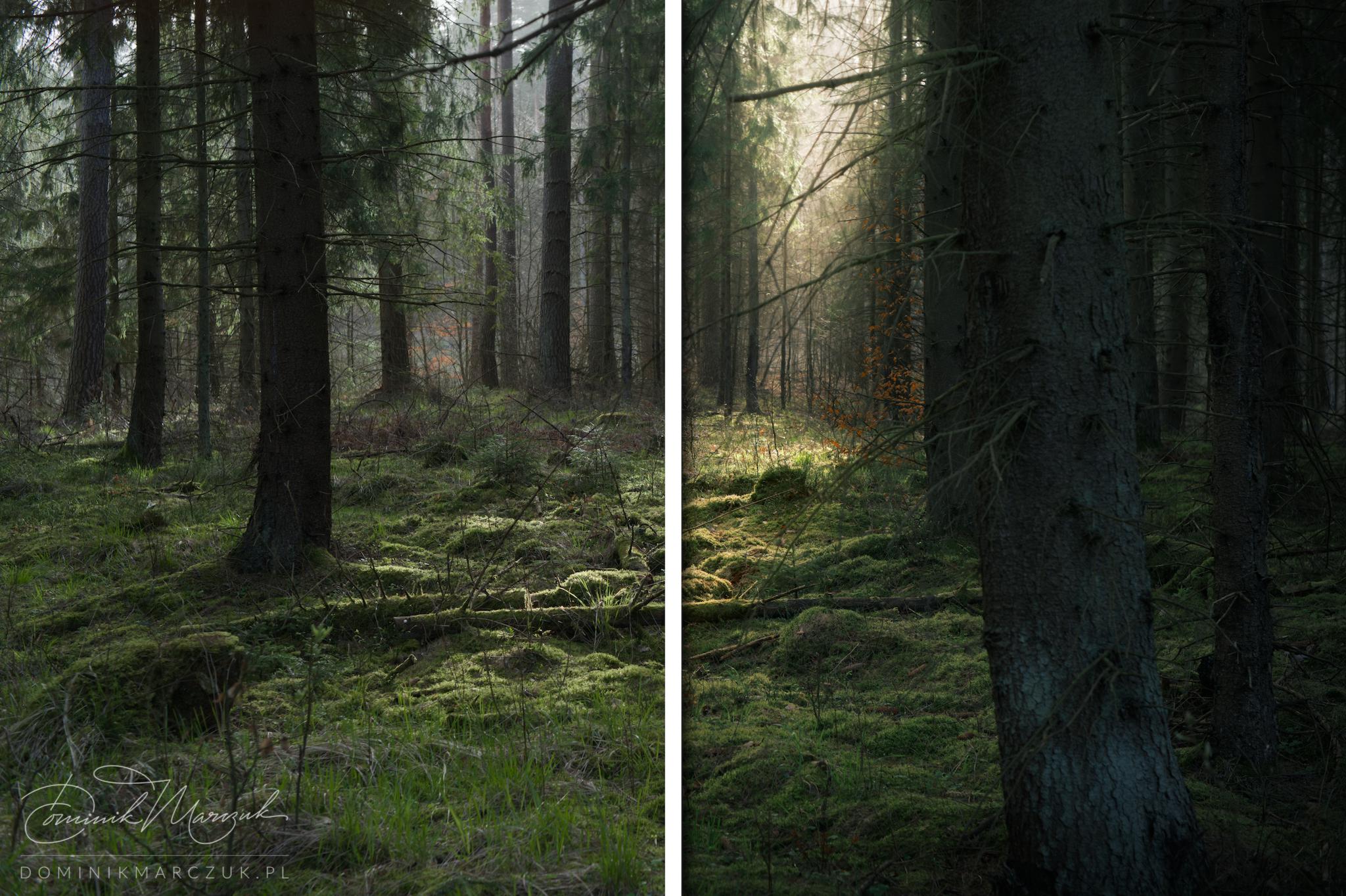
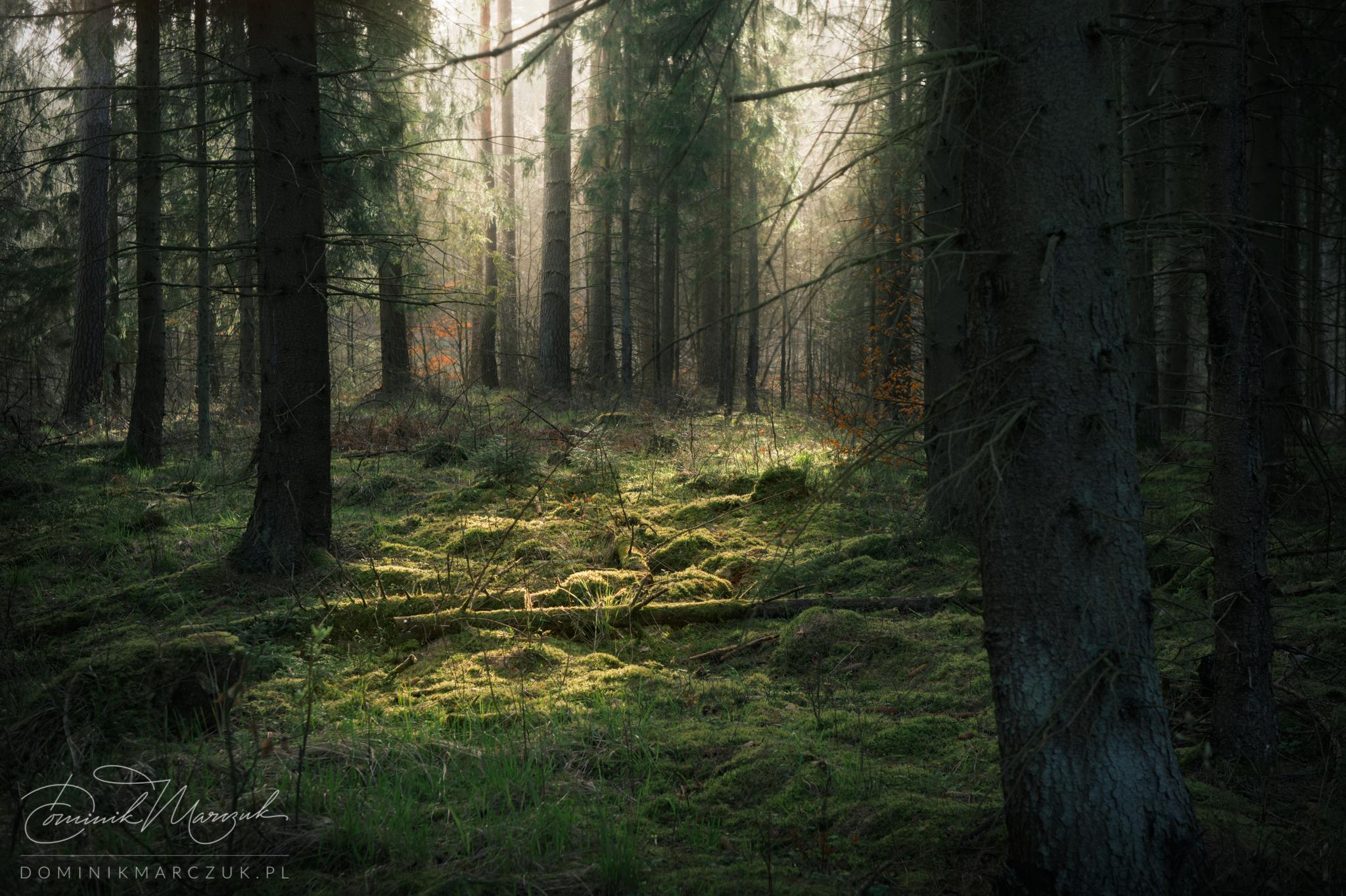
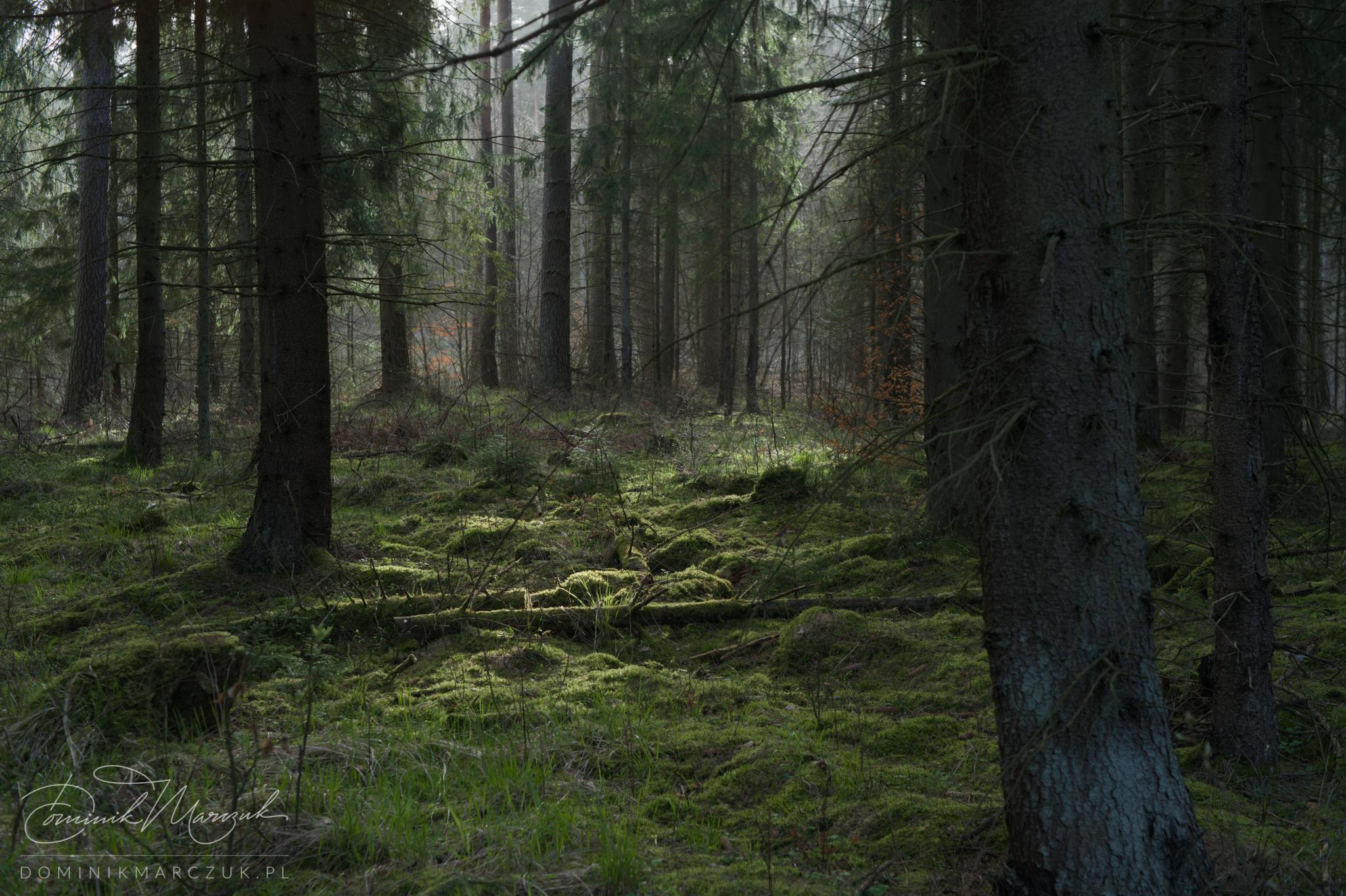
Luckily, the forest didn’t disappoint. Near the beginning of my hike, I was passing by an area full of conifers, with the ground covered in lush, thick moss. I did not think much of it; in fact, I initially disregarded it completely. What caught my attention was a ray of sunlight peeking through the trees, illuminating a patch of moss. The sight wasn’t unusual or breathtaking - but it was interesting enough to press the shutter and move on.
Only at home did I realise that the photo had potential. It needed some work, of course, but that light was an interesting subject. I just had to bring it out and make it the star of an otherwise subdued scene.
Gear
I went out with my only camera that wasn’t a compact point-and-shoot: my Nikon Z7. My lens of choice was the Cosina Cosinon-S 50 mm 1:2 - a surprisingly sharp nifty fifty from the 80s. Fully manual, but still usable via a Pentax K-to-Nikon Z adapter.
There was no deeper reasoning behind the lens choice apart from the fact that I’m comfortable with standard focal lengths. I hadn’t used this particular Cosina in a long while, as I usually relied on a range of f/1.8 or f/1.7 lenses from the same era, so it was time to give it some use. I don’t currently own any autofocus lenses, and all my 50 mm lenses are adapted vintage primes.
The photo was shot at 1/8 s, f/5.6 and ISO 64.
Edit
My first goal was to draw the viewer’s attention to the sunlit moss patch. I achieved this in two ways: I darkened the sides and the bottom of the frame, while at the same time masking the moss patch and making it brighter. On top of all this, I added a vignette to further darken the corners, making the moss patch stand out even more, creating a clear path towards the light in the background.
The sun filtering through the trees required two steps to make it believable. First, I masked the areas where I wanted the sun to be the strongest, and applied negative dehaze. This mimics the drop in contrast around a strong light source and creates a glowy feel. The second part of the process was dodging the same areas, making them brighter.
With the selective dodging and burning done, I was left with but one final edit: making the sun warm and pleasant. I wanted the lit parts to feel inviting, as if they were calling the viewer to go towards them. I achieved this with split toning. I gave the highlights a warm yellowish tone, but coloured the shadows a cold cyan. This cooled the forest down, and made the sunlight golden and almost ethereal.
I was pleased with the result. But the last step of an edit is always doing nothing. I left the image alone for a few days to make sure I still liked it. I did. That’s when I considered the edit complete.
Note on the Title
Nawia is said to be the Slavic realm where the dead spend their afterlife. A rough equivalent of Elysium, Hades or Helheim, I guess. I thought the sun in this image had an otherworldly feel to it, which is why I went with the folklore reference. The light is calling the viewer, and “going towards the light” is widely used as a way to refer to dying.
So, Nawia (Nav) it was, and the cold green pathway that perhaps leads to it.
Bonus Photos
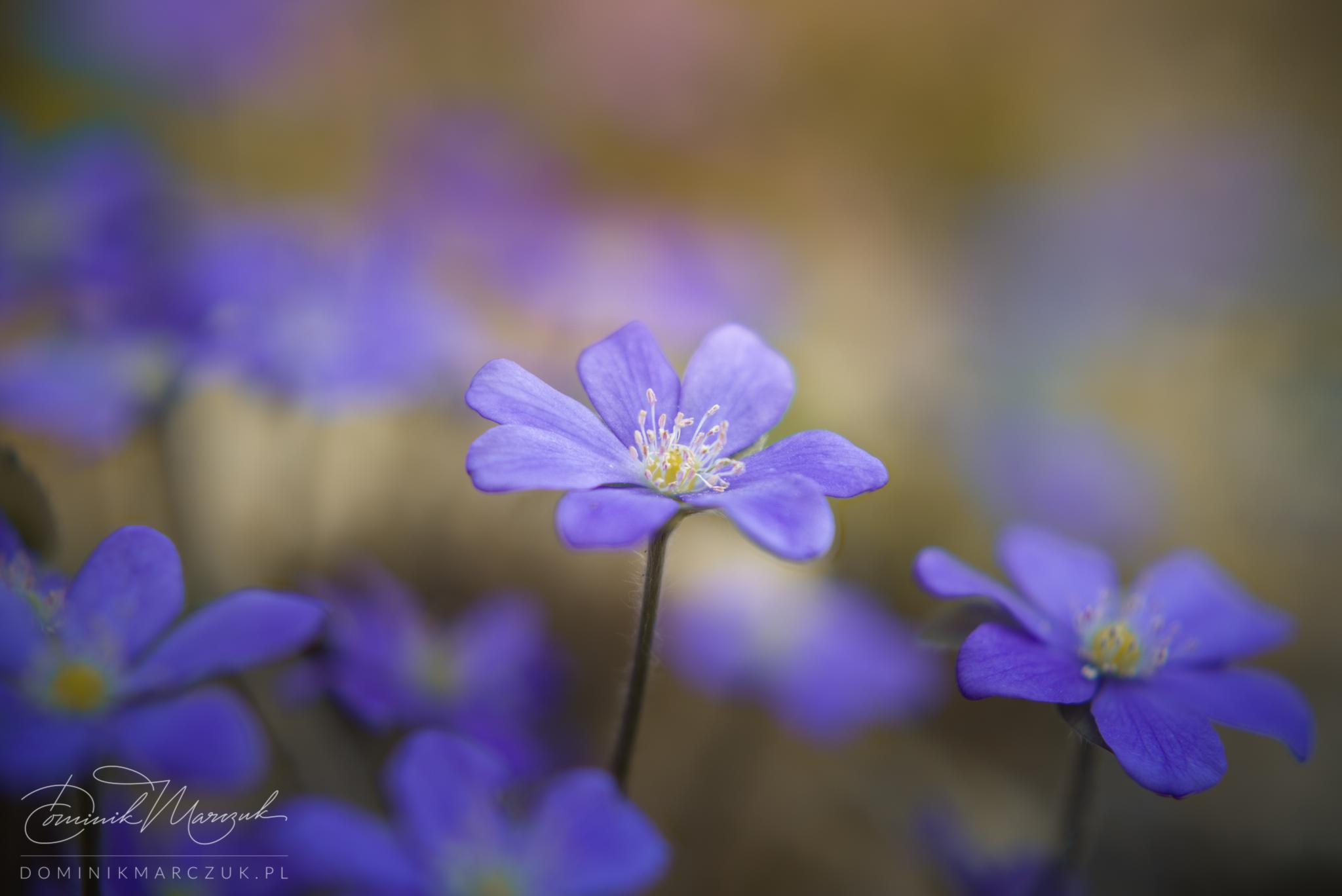
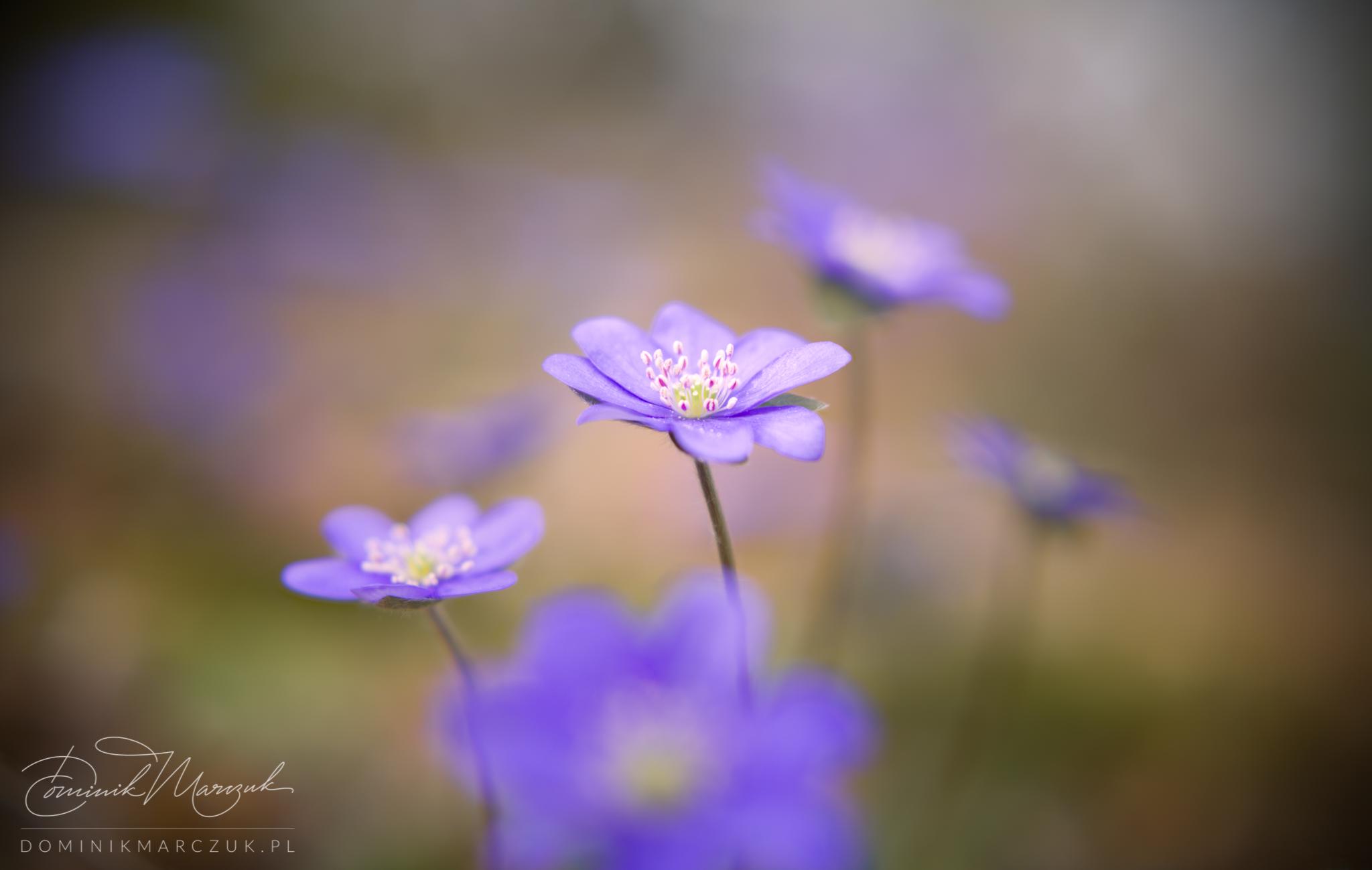
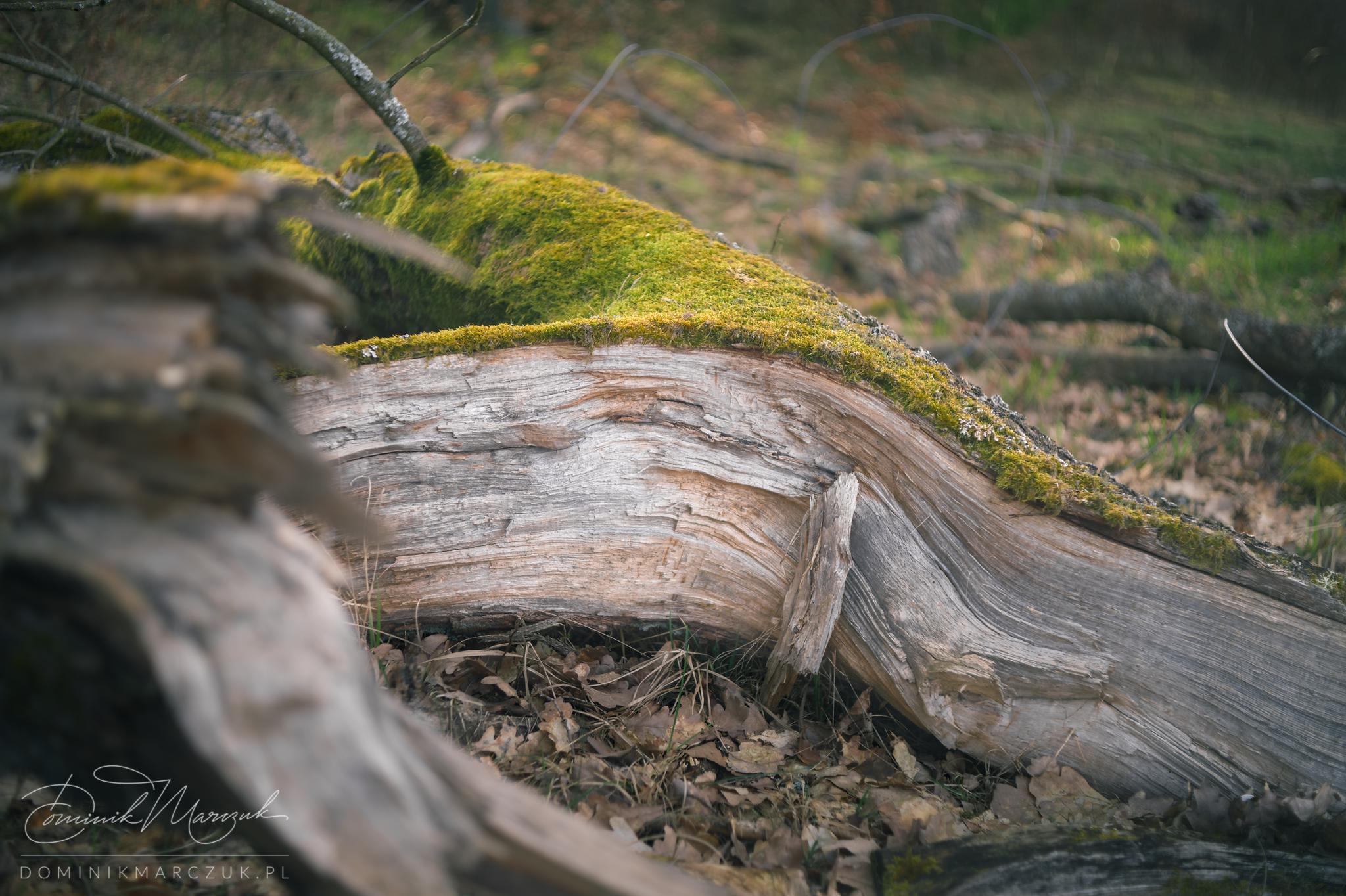
Here are a few other photos from the same hike, including the hepatica.