Om Nom Nom!
This summer, the population of aphids boomed, which caused the ladybirds to follow suit. My camera and I were ready.
This summer, the aphids boomed. I noticed it in mid-June, in a meadow several hundred metres from my apartment. It’s special because it’s not technically a park, and no one takes care of the landscape. The trees grow in random spots, there are no paved paths, and the grasses are untrimmed, full of thistles and weeds of all sorts and colours. A perfect place for bugs. Every weed had aphids, and ladybirds were feasting on them like crazy.
A while later, I was walking along a footpath in front of my apartment. It’s a path I visit several times a week, so I don’t typically focus on details; I’ve seen it all hundreds of times. This day was different: I wanted to check if the aphids - and ladybirds - were there too. Bingo! They were!
The grasses and bushes there are well-kept, so I could do some macro photography without even getting off the pavement. I rushed home to grab my macro rig and started taking photos.
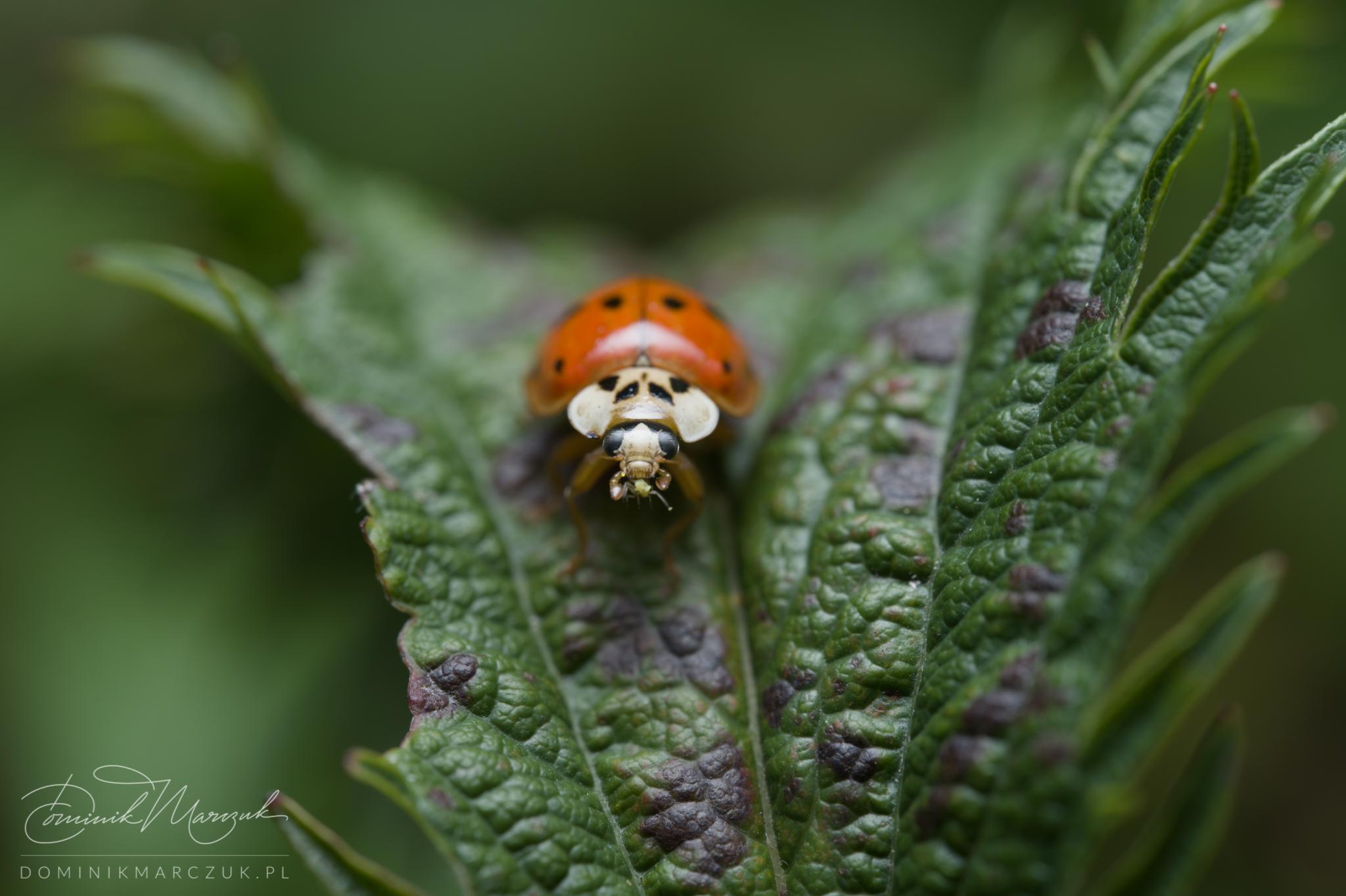
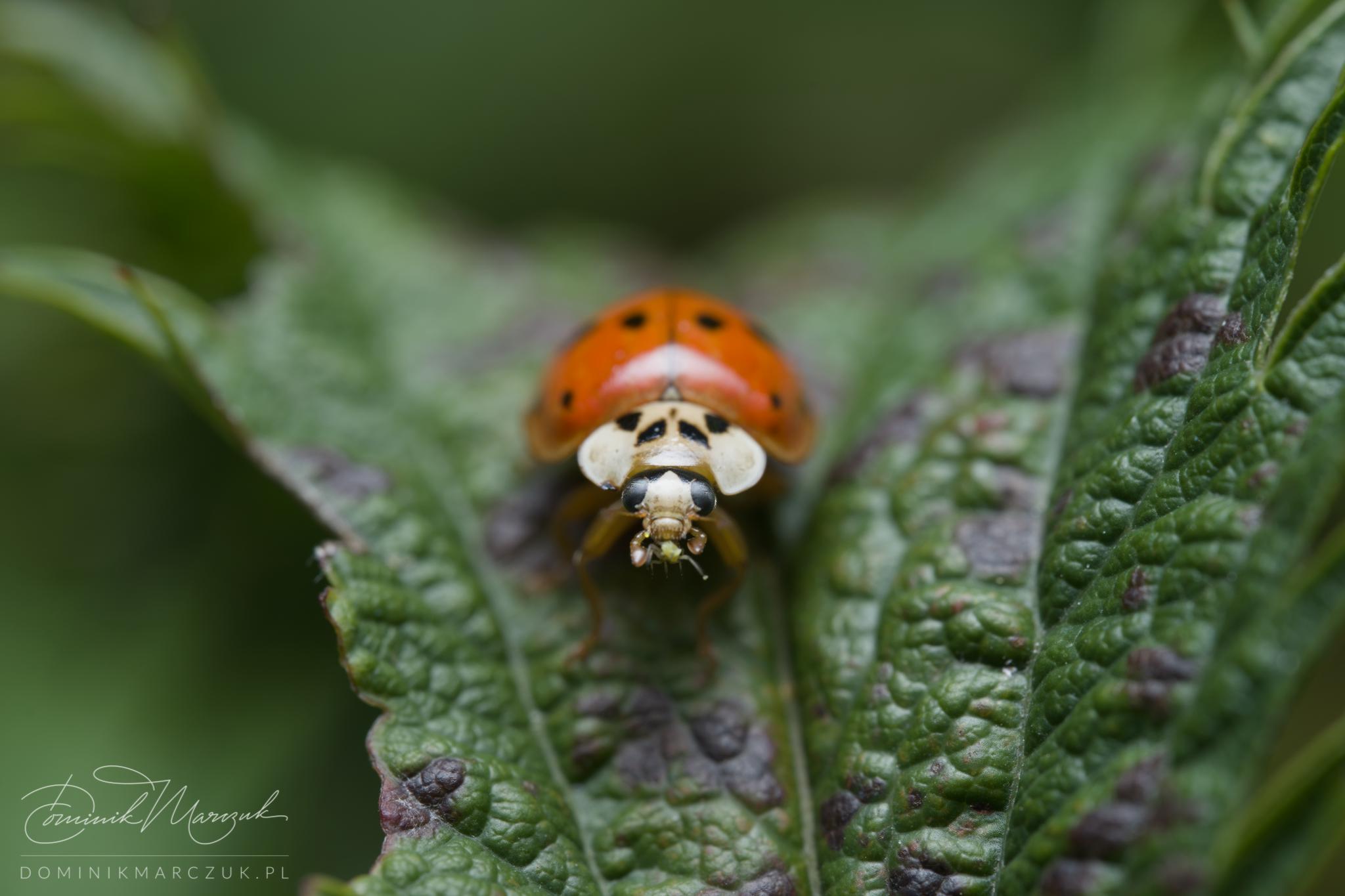
The entire photoshoot took maybe 15 minutes; I was spoiled for choice and didn’t need to hunt for subjects at all. Here’s the frame I liked the most:
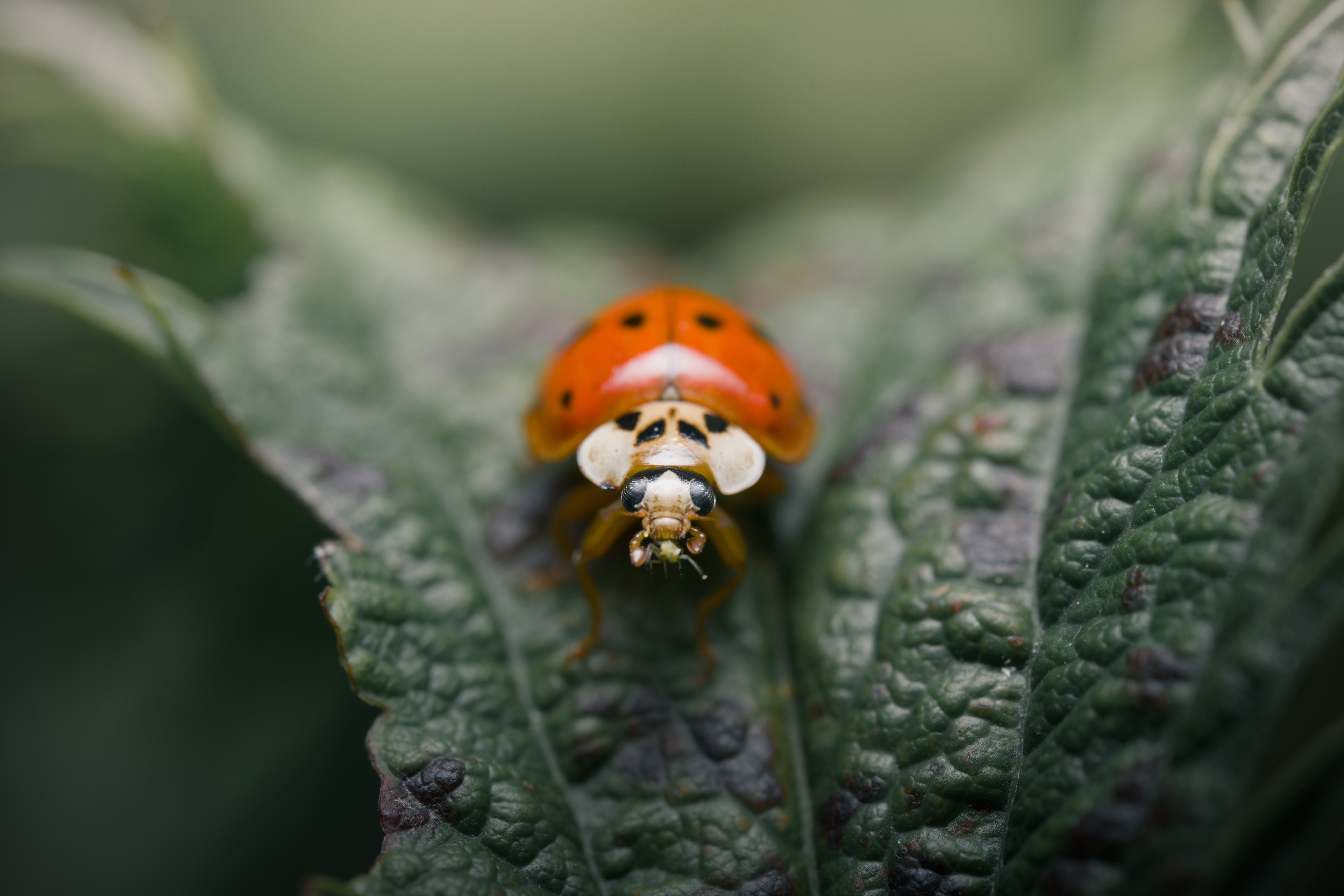
The head-on angle was pure coincidence: the ladybird was facing the pavement, aligned with the leaf’s central vein. I didn’t even need to wait for it to move or turn; I just pressed the shutter.
What’s good about it is the colours, the composition and the moment. The colours are a given: ladybirds are red and their environment is green. It’s a natural colour separation, and one of the reasons why I like photographing red bugs. The composition is symmetrical: the leaf roughly divides the frame in half, the ladybird sits almost exactly in the middle, and its segmented eyes are in sharp focus. And the moment: there’s an aphid sticking out of the ladybird’s mouth.
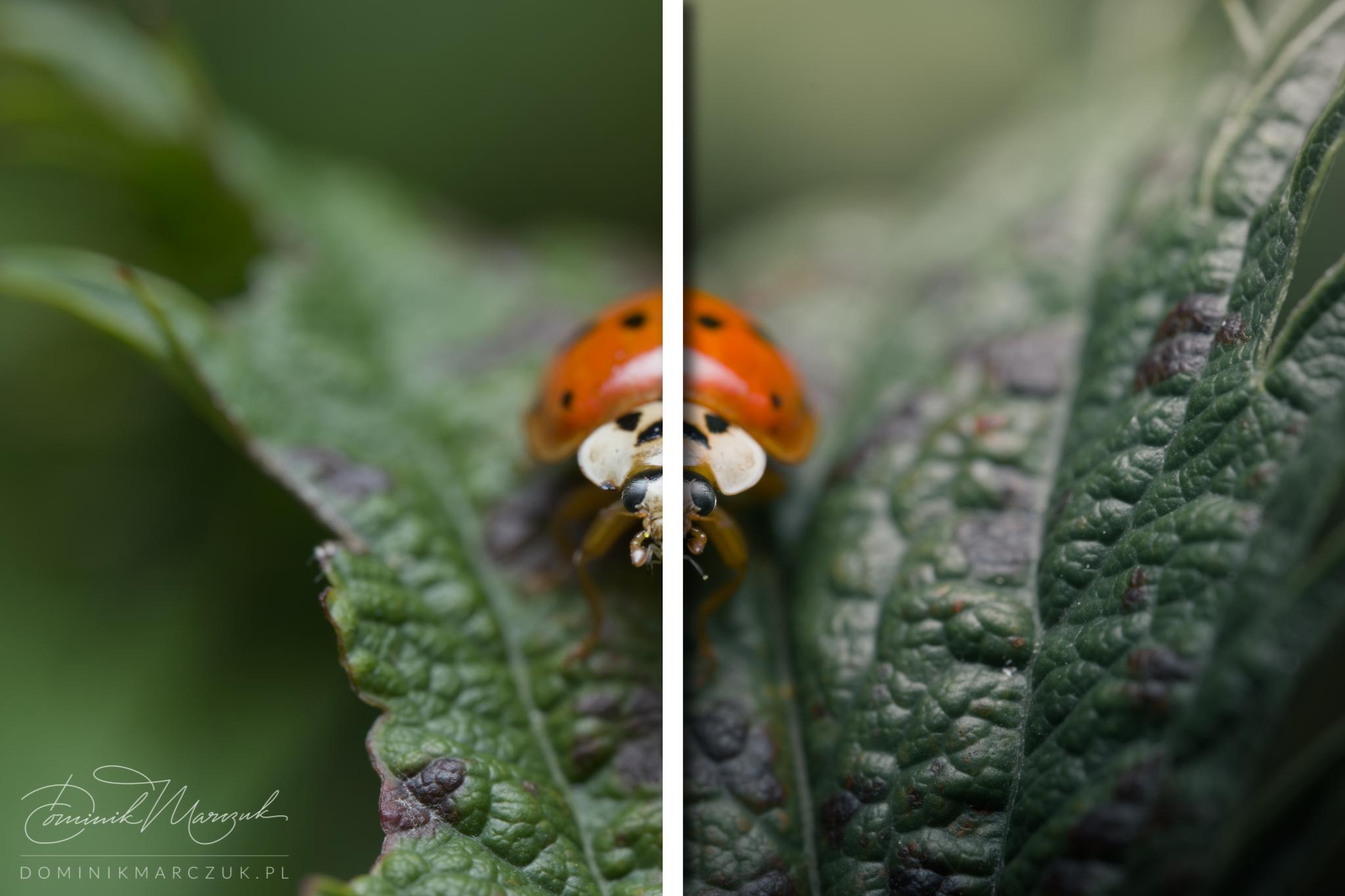
The frame was great straight out of the camera, and only needed a few subtle tweaks. The flash created flat, uniform lighting, but in reality, it was a sunny day. I wanted to recreate a hint of sunlight illuminating the scene from the top.
Gear
Here’s my macro gear:
- camera body: Nikon Z7
- lens: Laowa FF II 90 mm F2.8 CA-Dreamer Macro 2x
- flash: Godox TT685 II N
- macro flash diffuser
I shot at my camera’s flash sync speed, 1/200 s, at ISO 64. I stopped down to f/8 to get a decent chunk of the ladybird’s head in focus; at this magnification, the depth of field is still very shallow.
Edit
The cropping was quite simple. I wanted the ladybird exactly in the middle, for an almost perfectly symmetrical composition. The bug was ever so slightly off-centre, so I rectified that. At the same time, I cropped out some of the negative space on either side of the leaf, so it was a double win.
The colour adjustments needed to be subtle. There was already good colour separation; I only wanted to nudge it a little. The red of the wing cases got a smidge brighter and more vibrant. The greens became slightly desaturated. I also desaturated the purple spots on the leaf, so they didn’t attract unnecessary attention. Together, these changes helped the ladybird stand out more.
The sunlight effect didn’t take much. I added a radial gradient at the top, increased its exposure and warmed it up a little. To create a believable shadow, I darkened the bottom part of the frame.
As a final touch, I wanted to make the ladybird’s segmented eyes stand out, which is why I masked them and boosted their local contrast.
And that was it. I could have pushed everything further, but more extreme edits simply weren’t necessary. The base image was already good; the edit only had to stay out of its way.
Here’s a comparison of what I started with and the final result.
Bonus Photos
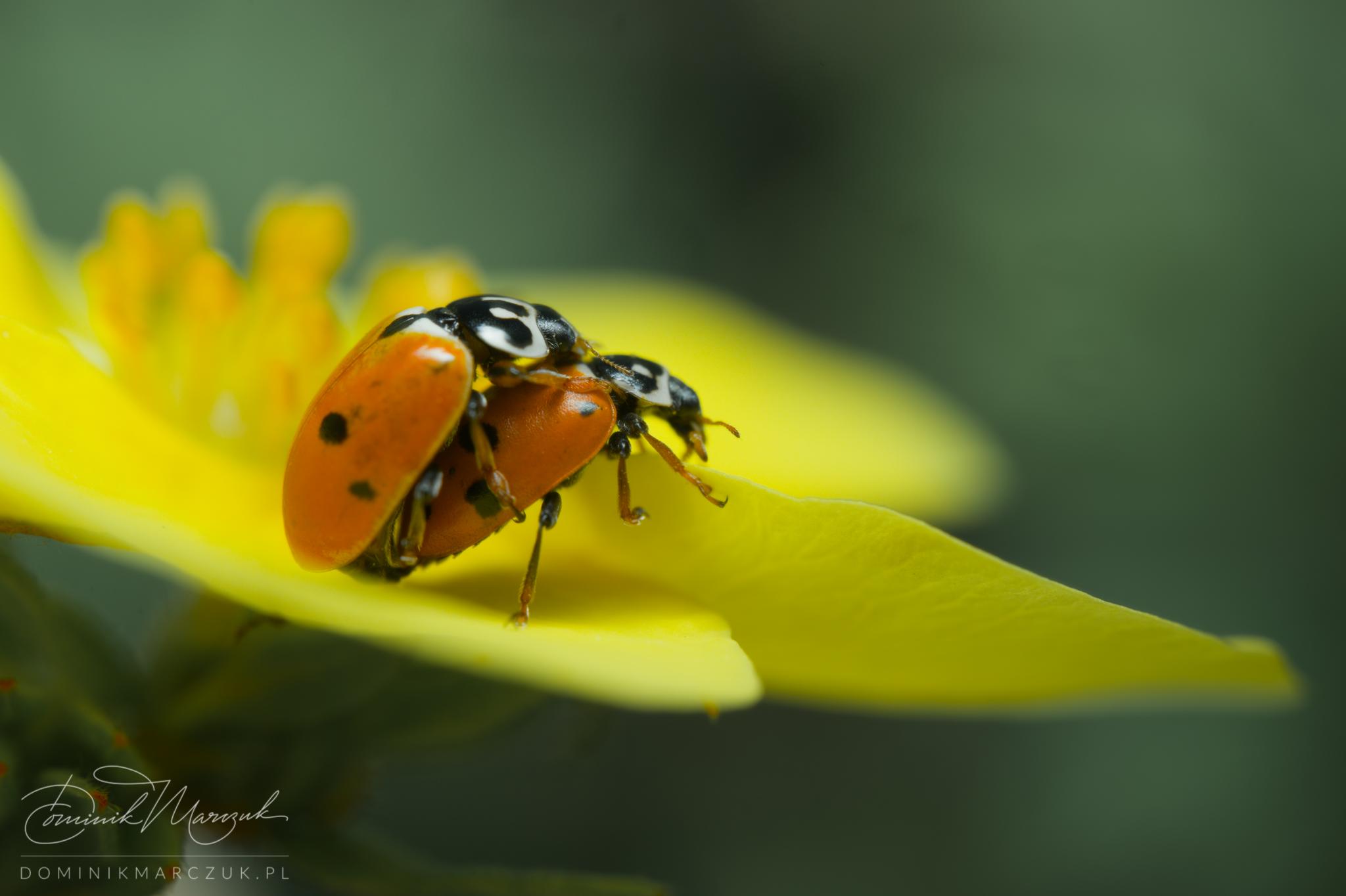
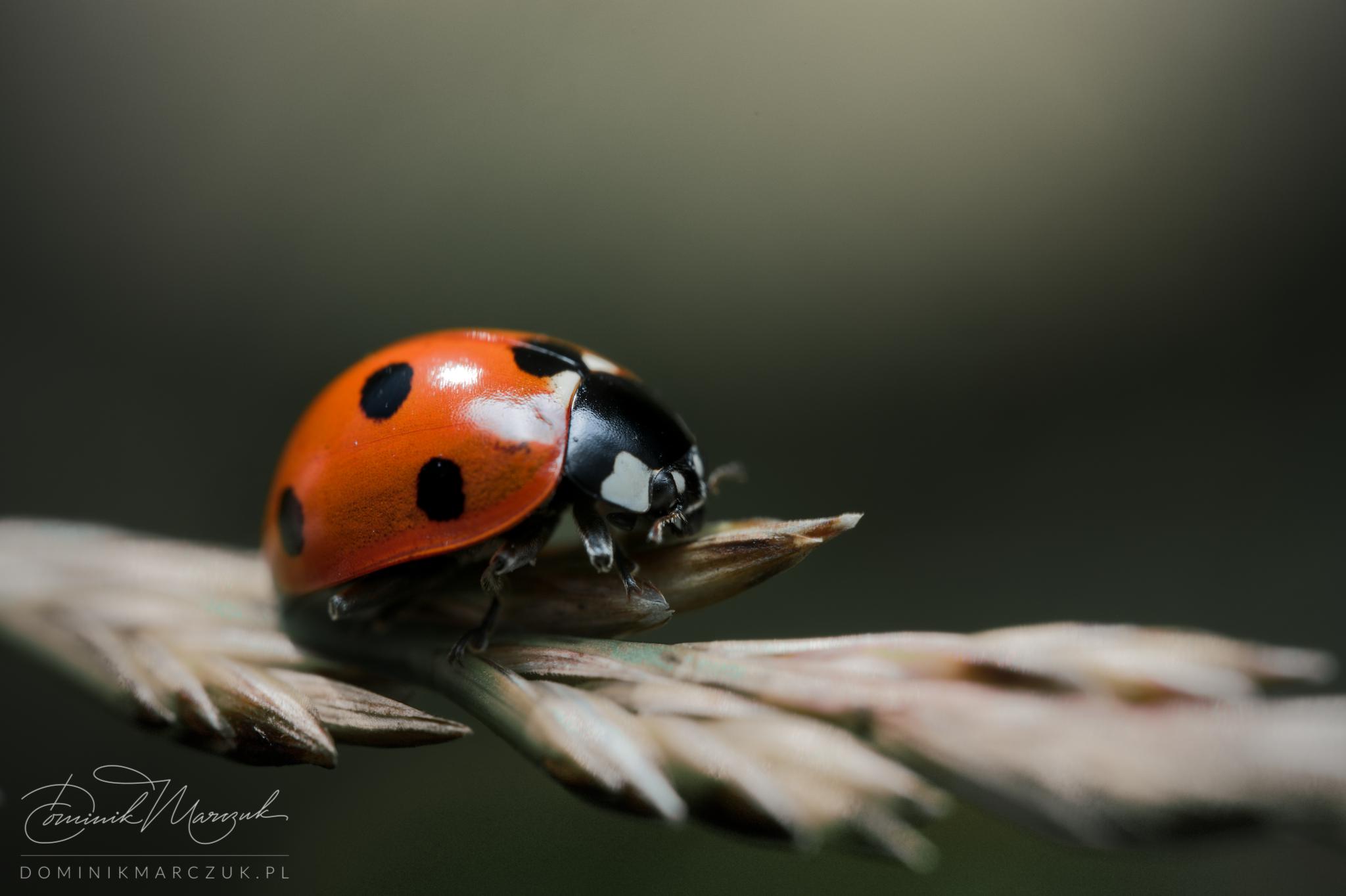
I also took a picture of two ladybirds mating on top of a yellow shrubby cinquefoil flower. Well, technically, that was a ladybird and a gentlemanbird. The picture was kind of NSFW, but I still posted it on my socials. The reception was good. Here it is, along with another one of my favourite picks from the same day.